Wednesday, 4 May 2011
Stevie Munn. Fly Fisher.: Hosted Fishing in British Columbia, Canada
Stevie Munn. Fly Fisher.: Hosted Fishing in British Columbia, Canada www.anglingclassics.co.uk


Hosted Fishing in British Columbia, Canada
Exclusive Escorted Salmon Fishing Trips to Canada BC

British Columbia, Canada, has some of the most phenomenal and exciting sport fishing opportunities the world has to offer. Every year the salmon runs, number in the 10's of millions. The sturgeon fishing is world class, and if that's not enough, they also have a fantastic steelhead and trout fishing. Simply speaking, British Columbia and it rivers produce an awesome year-round fishery that's tough to beat. Combine this great fishery with spectacular scenery wildlife and tips and help from a qualified Hardy Academy Instructor, and you have the opportunity to experience the trip of a lifetime! Fishing in British Columbia, Canada is nothing short of world class. Whether you are a die-hard or an occasional fisherman, we will spoil you with excellent fishing.

Fishing Trip October 2011
Sturgeon & Salmon - British Columbia - Fraser River -
The mighty Fraser River constitutes the back-bone of one of the world’s great salmon-yielding systems, comprising countless tributaries that have been spawning sites since time unknown. Amid breathtaking scenic beauty you’ll find yourself fishing the region’s local rivers - the Fraser, the Chilliwack, the Vedder, the Harrison and the Chehalis - for Chinook, chum, Coho, pink (running every other year, including 2011) and sockeye salmon plus steelhead, trout and the massive sturgeon (the latter being catch/tag and release only).
There are few places left where you can genuinely be surrounded by superb fishing and stunning scenery. The legendary Fraser River system, which to this day remains un-dammed throughout its 850 mile course, ranks as one of the world’s last great salmon producing rivers and still has no rival in its migratory salmon runs. There is no doubt about it sturgeon of all sizes are exciting - most adversaries leap upon feeling cold steel and 60-180lb. specimens are everyday catches on the Fraser and Harrison Rivers.

Normal Itinerary
This Year we are offering a deluxe trip with all meals but dinner.
5 days guided fishing, 8 night’s accommodations, 10 day trip, Airport Transfers.
Lunches for your fishing days,
Return flights from UK/Ireland
Accommodation Breakfast at hotel.
5 x 8hr day jet boat guided fishing
Shuttle to and from fishing
Rest day or fish the Vedder River
Any tuition needed

Advantages
Fully qualified instructor
Local knowledge of the area and river.
discount on all tackle for your trip bought at www.anglingclassics.co.uk
Flyfishing guides on all boats
Meeting like minded anglers
Breakfast at hotel. & Lunches for your fishing days, most trip dont do this and charge .
Best Hotel in Area .
HAVING A GOOD TIME.

Your angling adventures can also include
Improve on your fly casting techniques
Double Hand Traditional Spey and Skagit casting techniques
Single Hand Casting techniques
Tackle talk, the basics required
Learn how to tie fly leaders and attach flies
Importance of fly selection
Top Salmon fishing & Sturgeon fishing
Top Class Salmon Fishing With Top Class Guides, Hosted By A Top Instructor.

The fishing is spectacular. The thunderous roar of the mighty rivers fills your ears, as you gaze up towards the sky you are greeted with breathtaking mountain views and towering formations of chiseled rock. Known as! The Great Outdoors!
Located just 1 hour east of Vancouver offering visitors a liberating and exhilarating experience.

Stevie Munn is a proud member of the Hardy Greys Academy, and The Game Angling Instructors Associations which comprise of instructors from around the UK and Ireland, who actively promote the best instruction service for anglers wanting to improve their technique. Stevie has been teaching game angling for many years and are devoted to fly angling at its best.

If you need more information on what you will need to bring please email

Testimonial:
"I can't say enough. the best fishing trips I have ever had. I can't thank you enough."
Robert Hayes

We use Registered Top Canadian Guides in compliance with Canadian Law
Sunday, 3 April 2011
Eency Weency Spider. By Stevie Munn

Spiders are a series of fishing flies that originated in the North of England probably in Yorkshire, certainly over 300 years ago, often known as "North Country Spiders, they are soft hackle patterns which are deadly when fished upstream, across or downstream. They represent a fly fishing tradition which goes back many years and they remain in use today because they are so effective when fished in the correct way. These flies are constantly in use on rivers throughout the UK and Ireland and they are effective on most trout streams around the world. The origin of these patterns, as with most old fly patterns, is shrouded in the mists of time. Some of the first descriptions were discovered in an 1807 document written by a Yorkshire farmer named John Swarbrick. Due to the popularity winged flies at the time Swarbrick's spiders were used by a few local anglers for many years but as a result never really became popular. It was only during the late nineteenth century, that the spider pattern became a success with the publishing of Mr. T.E. Pritt's classic book, 'Yorkshire trout flies'. There were other exponents of the spider pattern writing at the time but it was Pritt's book that really hit home. Pritt saw that it was almost impossible to imitate an insect perfectly from an aesthetic point of view, but not from that of an impressionistic one, this is something many top fishing flies have in common.
The word "spiders" can be fairly misleading to some as these fly patterns do not actually represent a spider that you may find in your bath or one that spins a web in your garden, but rather they imitate a hatching insects caught in the surface of the river - or in the surface film of a stillwater. They simply got there name from the fact that they have a long webby hackle that when dry looks a bit like the eight long legs of an arachnid. A true North Country Spider should have a fairly short body by modern standards, no longer than from the eye to a point opposite the hook point or just past. The body should also be slim to match that of an insect and as I have said a long webby hackle that consists of one or a maximum of two turns of feather. There are many great spider patterns; the three I list here among my favourites fish them with confidence, they are true classics.

Partridge and Orange
HOOK 12 -16
THREAD: pearsalls orange silk
BODY orange tying silk (some recommend orange floss some give fine gold wire rib)
HACKLE: Brown partridge back feather
This Fly is one of my favourite spider patterns a truly great fly that can be fished right though the season on rivers for trout, one of my fishing pals Davy Telford rarely has it of his cast when wet fly fishing, It is not only a good fly on rivers as it is also a useful fly at duckfly time on the loughs although then I would suggest you use the floss body one and maybe add Jungle cock cheeks to the fly. Traditionally fished 'upstream and across' or on the swing, and dead drift like the other spider patterns. The fly can be fished on its own or as part of a team; normally I would fish it on the dropper. There is another Orange Partridge pattern, dressed by professional tyer Alice Conba from Ireland, It features a tail made of three strands of bronze mallard flank, as well as a more swept back, fuller hackle collar. This fly becomes much more a standard wet fly in her version and less a North Country Spider and would also be well worth a try, although I must admit the original for me is hard to beat.

Waterhen Bloa
HOOK: 12 -16
THREAD: Primrose yellow lightly waxed
BODY: Primrose yellow silk lightly dubbed with mole or a mixture of blue rabbit under fur and mole. The silk should shine through the dubbing. Oliver Edwards describes it as a mist of dubbing.
HACKLE: Feather from the marginal coverts of a waterhens wing, or sometime I use blue dun hen hackle.
I love this fly; it’s a true great and fish it a lot on my local rivers. The Waterhen Bloa is a brilliant large dark olive imitation and in the smaller sizes it is also a good blue winged olive imitation, this maybe the reason I like this fly so much as many rivers in Ireland where I grew up fishing have hatches of these beautiful upwing flies and the trout feed on them avidly. It’s also a fly that works on stillwaters like most of the spider patterns. I know many very good and famous river anglers from around the world that rate this fly as one off their personal favourites, to me it is a fly that most anglers fishing anywhere that gets an olive hatch should carry in their fly boxes, simply a great wet fly.

Partridge and Yellow
Hook 12 - 16
Thread. Yellow
BODY .Yellow tying silk (some recommend Yellow floss some give fine gold or silver wire rib)
Hackle. Light Partridge breast
I spent some time thinking what my third choice would be , I very nearly went for the Snipe and Purple , which is a great fly and one I have used and do well with and also toyed with adding the Greenwell Spider which is like all of the greenwell series simply one of the greatest trout flies in the world and I can’t express that enough it is one I use often and my father would not have went fishing without, but I decided to add The Partridge and Yellow as it is a true old spider pattern and is often my choice when the paler olive species are hatching. It imitates a large range of olives and other flies and it’s a fly that I have seen trout move quite a distance to take and it’s like the two other flies I have listed are simply super.

Wednesday, 23 March 2011
Wednesday, 23 February 2011
March , Run for your rods it’s over

Hooray!!! Its finally here, my real fishing season that is, as in my part of this Island of Ireland the game angling season begins on the first day of March. I feel that I’m starting to come alive again like some woodland creature coming out of hibernation, as dedicated fly anglers we have survived the dark days of winter, we have endured the deadly cabin fever, some of us may have even suffered particularly badly and even fell prey to mind numbing daytime television and we may also even resorted to things that so called normal folk would do, working most days, house work, decorating and even washing the car from time to time, to try and take our minds off casting to a trout or salmon in a beautiful shining stream or wild Irish lough, but now we feel invigorated once again and we run around like frantic mad March hares, we are now busily doing hugely important tasks like sorting out our tackle, cleaning down our fly lines, fixing or replacing leaky waders, taking our fly rods out of storage, checking their rings or line guides and perhaps most importantly dressing wonderful flies to restock our fly boxes and grace our leaders and hopefully take us a fish or two in the coming season .
OK I know I may be exaggerating just a little bit, I know a lot of us now fish in the winter for rainbow trout at stocked fisheries and some off the salmon rivers have been opened in Ireland in January and February and perhaps some of us may have also been out in search of pike, which is becoming ever popular over the winter months with the fly rod and I know some of us may have even been fortunate enough to have even done some angling in a far of land ( infact I will Be fishing in B.C Canada) and all these parts to our sport can be great, but as local anglers we now have many more options as rivers and lakes open and winter starts to loosen its cold grip and spring pushes in , we will even feel like going fishing once more. Now here are three flies that will do very well in the coming months, I hope you will dress a few.

The Griffith’s Gnat
Hook: size 14 -26 (any fine wire fly hook)
Thread: 12/0 black
Body: Peacock herl
Hackle: Grizzle (genetic capes are best for this fly)
Tying tip: Start your thread and wind back to the bend. Prepare a grizzle hackle feather and tye it in. I add a drop of diluted head cement too the tye-in point, and let dry this stops the hackle pulling out and makes the fly a bit more durable.
The Griffiths Gnat has become a truly classic dry fly pattern that can imitate many of the items that are on a trout’s menu. I love flies with peacock herl in the dressing and this is a great fly that will take trout after trout. This fly was first designed as an emerging or adult midge or as a midge cluster pattern and for me it is a fly that every trout angler should carry in their fly box whether they fish on Stillwater’s, loughs or rivers. The fly was invented by an American fly fishing legend Mr George A. Griffith who to his immense credit was the founder of Trout Unlimited in 1959, which is America's leading trout and salmon conservation organization that does fantastic work, and now has over 140000 members. The Griffiths Gnat’s beauty also lies in its use of simple and common fly tying materials to produce one of the world's most effective dry flies. This fly will work right though the season at any time when trout are feeding on small insects, it’s a must have pattern.

The Blae and Black
Hook: 6 – 16 wet fly
• Tying Silk : Black
• Tail (optional) : Pheasant tippet or blood red feather
• Body : Black floss or seal fur some old patterns ask for water-rat or mole
• Rib Silver oval tinsel or wire
• Hackle : Black hen
• Wing : Grey duck, medium starling or hen blackbird
• Head : Whip finish, trim & clear varnish
The Blae and Black is a very old pattern and a fantastic one, in my research of this fly I have not found a date, most books suggest it’s a fly of Scottish origin and some tell me it is linked to another truly great old fly the Black Pennell, if this is true and it seems likely as its almost the same as the Pennell but with a blae wing, it makes the fly Edwardian and most likely devised by an English man, Mr H. Cholmondely Pennell, who was a well to do angler that spent much of his life fishing in northern Europe and wintering on the French Riviera ( Lucky man ). The Blae and Black is a very good choice early in the season if lough fishing at duck fly time, I will sometimes dress it with jungle cock cheeks for this type of fishing and fish it on the middle or top dropper, the trout most likely take it for an emerging fly . It is not only a lough fly and will also work well on the river and when dressed in its larger sizes it has often worked for salmon, dollaghan and sea trout, so it’s a truly versatile and extremely useful pattern.

The Camasunary Killer
HOOK – 6 – 12 wet fly or Low water single salmon 10
THREAD – Black
TAIL – Royal Blue Wool or Floss
RIB – Oval Silver tinsel or wire
BODY – In Two Halves, the First Half Royal Blue Wool or floss, the Second Half Red Wool or floss.
HACKLE- Black
The Camasunary killer was first shown to me by a fishing pal of mine Mr Jackie Child, while I was fishing with him on the Rosses loughs in Co. Donegal many years ago, it is a fabulous fly that is named after a fishery on the Isle of Skye, that is off the coast of west Scotland. The fly first appears in a book called ‘Fishing From Afar’ by Stephen Johnson, who interestingly wrote his book in a prisoner of War camp in Germany after his plane was shot down during World war two. The fly has a reputation as a great Seatrout and Salmon fly and appears in another great book John Veniard's ‘A Further Guide to Fly Dressing’ published by A & C Black in 1964, in this it is stated by Peter Dean "It is without any doubt the most successful wet fly I've ever come across. Salmon take it as freely as sea trout, and in small sizes it is an excellent lake pattern, as good in Scotland and Ireland as in the south and west country’, high praise indeed it’s still a very popular fly and a know a lot of anglers who love this fly and for good reason ,I have been told by many that It works very well in the peat stained water of the Connemara fisheries, where it can be fished on the dropper or the point

Sunday, 20 February 2011
A Love affair with Dollaghan
I have a love affair with trout; to the non angler this may sound strange or even downright weird, but I must confess I love all wild trout but perhaps my favourite is the brown trout from Lough Neagh in Northern Ireland it
Is called The Dollaghan, a trout that I have fished for almost my entire life, and my father fished for before me.
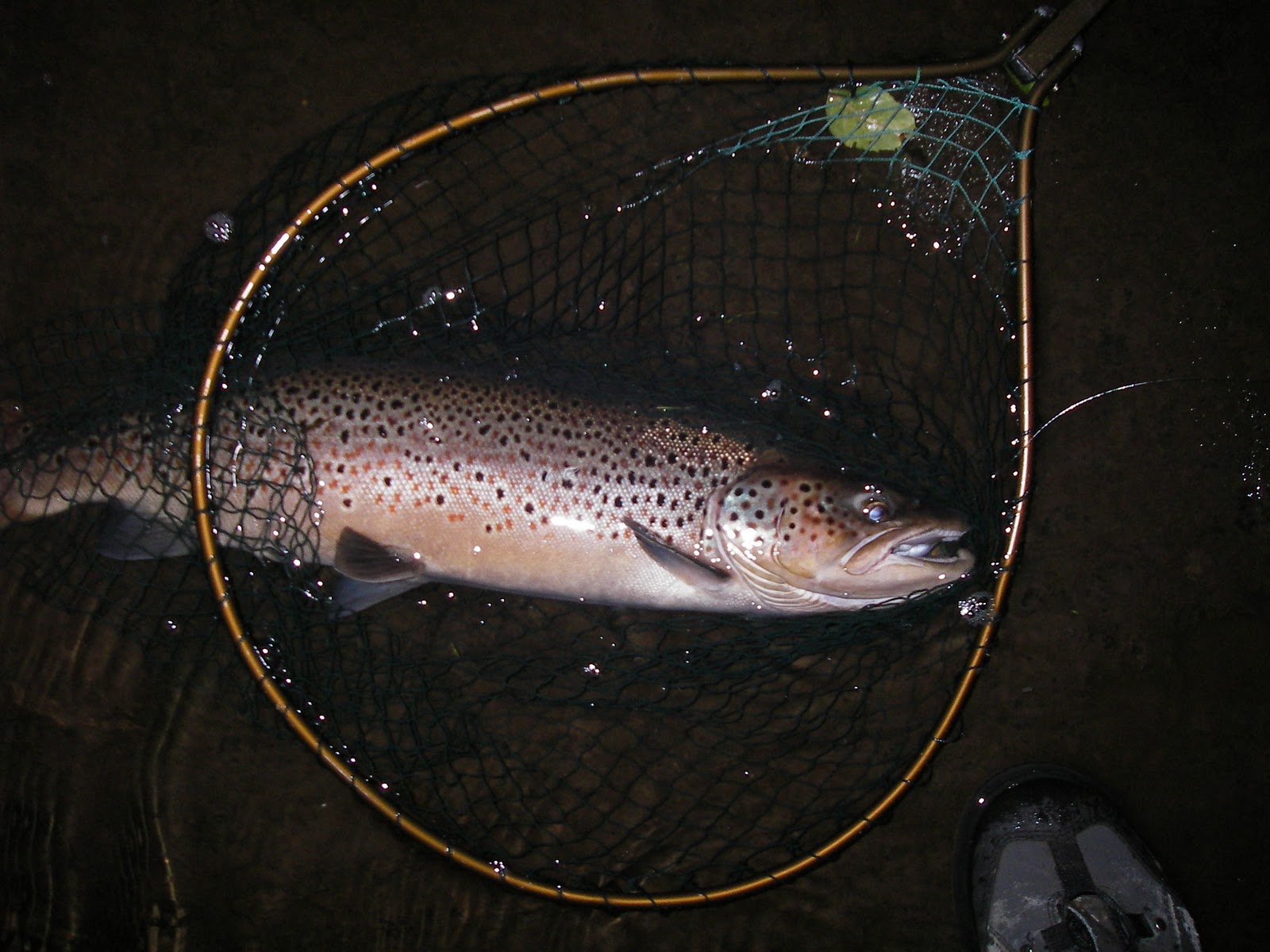
The name Dollaghan comes from the Gaelic word dulach that means swift running and the translation of Dollaghan means ‘run of fish’ or ‘running fish’. Within the Dollaghan family there are a number of different trout that scientific studies have shown spawn separately and thus maintain a genetic isolation. Local names for these fish include Buddagh or Breddach which translate to ‘big fat fellow’ and are very similar to Ferox, there is also the Salmon Trout, a silver fish giving them a sea trout appearance. This is not the only similarity they have with their sea run relations, as like sea trout they are very light sensitive and shy, also Lough Neagh where they spend most of their life is although freshwater, like a sea the Lough itself is massive, the largest lake in the British Isles covering a vast 153 sq miles 400 sq km, I have been afloat on Neagh on Lough Neagh Fishing Tours boat and at times had to pinch myself , you can forget your not at sea as at times you cannot see land on the horizon.

Dollaghan achieve growth rates similar to Atlantic salmon while they feed in the Lough and on their return to their native rivers and can weigh from around two too well into the teens of pounds, and there are stories of bigger.
My personal heaviest to date was a large cock fish of around 10lb, but I have hooked larger and I know anglers who have been lucky enough to land some very big fish. Holding on to these big fish while you have just hooked them is very hard; you need a large helping of luck to keep them on. They have a hard mouth for a trout, and they shake their head while falling back, this is normally how you can tell you have just hooked something substantial and is the crunch time when they either stay on or are lost, to be honest most of the very big fish are lost, but in a seasons fishing I would normally catch quite a few fish over five pounds, big trout in anyone’s book anywhere in the world and there’s always some lucky angler that will get a real brute of a fish.

Tactics for Dollaghan seem to vary slightly from river to river, you can have good sport during the day, if the conditions are right, but the most successful time seems to be evening and night fishing, but if it’s a moonlit night it is often very slow, but strangely that’s often a good night for a salmon. The best conditions are thick cloud a day or two after a flood, when the water has cleared and if you know where they are the fishing can be great.

I love fly fishing at night - there is something magical about it, it’s the realm not only of Dollaghan but of bats, otters and owls, the stillness and the sounds of the river and the sights you see, for me it's wonderful. There are also some strange things that happen at night while you’re out fishing, sometimes it’s not for the faint hearted as your mind can play tricks on you, I had fished at night for years and am used to it, even so strange and funny things do happen. I remember fishing on the Sixmile on a very dark moonless and windy night, which are great conditions for night fishing, this night I was fishing with a fellow club member who had grown up on the Shankill road in Belfast and had no doubt seen his fair share of the troubles, we where fishing a famous night pool on the river when he let out a massive yell which made me almost jump out of my skin , screams in the dark when your least expecting them will make you jump believe me , even if you have fished a river for years at night, as I looked around I seen that my mate was lying on the river bank holding his face and shouting at me , some tosser hit me in the face with a stone, or it might have been, some bastard is cluding, that’s the Belfast slang, now growing up where we did we both know what its like to be hit with a stone, my problem was this was two in the morning in pitch dark, on a river bank miles from any towns, so whoever had thrown this stone was some bloody shot, it was only when I went to help my mate and picked his rod up I realised what had happened for hanging stone dead impaled on his dropper fly was a bat, which had been unfortunate enough to get caught on my mates back cast and hit the caster right bang in the middle of the face at about sixty miles per hour, the poor bat died on impact and my fishing partner had a very sore face, but we where both glad no one was chucking stones at us in the middle of the night, I always felt sorry for that kamikaze bat though at least he went quick .


Another night I was out fishing with my good friend Davy Telford and something unusual happened, Davy fishes with me a lot, he normally fishes rivers, and he wont mind me saying I sort of showed him how to night fish for dollaghan and he has got very good at it I must say, I say sort of showed as he was doing ok, I just tweaked him a bit and now he consistently gets fish at night, he fishes hard and there has been many a night I have let him fish though a pool before me only to be saying to him a hour or two latter, after he has had a couple of nice fish, Davy any chance of me having a cast, you see we take turns on certain short pools that we know that are good taking spots . This particular night Davy was wading down a pool we both like, I was sitting on the high bank above him watching, he was fishing his normal methodical way across and down ten times and then take a step, across and down ten times and then take a step and he was getting the odd take but the fish where not staying on, he was losing them, I knew this as about every ten minutes Davy would shout a curse word then tell me just lost one. I was enjoying the night just sitting there watching him and the things around me, when suddenly Davy shouted yes im in, good fish I shouted to him as I could see his rod tip bouncing in the dim moonlight, then Davy shouted God it’s a bloody monster mate and its running up the river past me, this has happed to us a few times and when it does its normally a very big fish and normally you lose it , but then Davy shouted something I have never heard anyone shout in all my years of fishing at night , Stevie he cried the bloody thing is now running up the bank on the far side above me , what I shouted , Davy cried its up the bank on dry land, and I could hear twigs cracking on the far bank , then Davy shouted its back in the water and its bloody smaller, by this time I was beside him and netted his fish and seen there was now a bit of the fish missing. It was then it dawned on us both what had happened, Davy got the take and hooked his fish which then was taken buy an otter hunting at night, the otter then swam passed him at a rate of knots and jumped onto the bank still holding the fish in its jaws with Davy pulling back the otter let go after a short run up the opposite bank and then Davy started to play his fish with a bite mark out of it. To this day Davy Telford is the only man that I know that has played a dollaghan and an otter at the same time.

Let me give you few tips on night fishing, do a thorough recce on the stretch you intend to fish during the day. And I don't advise wading unless you know the river very well, its good to know where you are walking; you don't want to end up swimming in a river at night! Wear a life jacket. For first timers I'd recommend hiring a guide. I learnt by growing up on the rivers, fishing with my father and trial and error. If you are on holiday or just visiting and want to maximise your chances of hooking a Dollaghan, a guide who knows the water and the tactics may help, if he’s any good. And if you're not used to the rivers and have never fished them at night before, a guide can help from a safety point of view as well. Also while fishing at night I do not shine a torch on the water it spooks the fish you should turn your back to the water when tying on a fly, its also good manners as there maybe other anglers around.

Tackle is very much a matter of personal preference. You could use heavy trout gear; I like a very stiff 9 to 10 foot rod. These are powerful fish I like a rod that can put a bit of pressure on them. Otherwise you can lose them in the rocks and snags, especially at night, as for flies basically they are fairly standard patterns, during the day small traditional trout flies like the Back Pennell, Dunkeld and the Gold Head Hares Ear take there share of fish. Then in the evenings I change to hair wing salmon flies or Irish shrimp flies these seem to work best at night, fished on an intermediate line and a short leader. Dollaghan will also take a floating lure stripped across the surface again similar to sea trout. Now whether Dollaghan feed on their return to the river is a point of conjecture and now I generally practice catch and release so, there are not too many stomach contents to inspect. However in the past my father and I did take our share of them and the stomach contents that I have looked at there is no evidence to suggest that these trout are gorging themselves. Perhaps like sea trout they do take the odd invertebrate. Certainly the Dollaghan do not eat lots when they are in the river and take like the salmon at times probably dew to pure aggression. Dollaghan have certain lies you will find them throughout the river system, but like any large trout they like a bit of cover - overhanging trees, undercut banks and so on. They will also lie around rocks and in deep runs and pools.

Nowadays, Dollaghan fishing is a lot more popular, and I think the attraction of these wonderful and unique brown trout is their size and that they are truly wild. While fishing in the dusk and into the darkness the excitement you feel if you get a take, not knowing if it’s going to be a 1lb or 10lb fish, or even a salmon (which happens quite often), this just keeps bringing me back night after night. In fact, the last few months of the season when the Dollaghan fishing is at its peak, is almost like being on the night shift. When my wife comes home from work at around six, I put the rod in the car and in 10 minutes I’m tackling up on one of my favorite beats watching the sunset.
In my job I have been lucky to fish in many places in the world, on many rivers and lakes, this is great and I hope to continue doing it, but it has also made me realize that what we have on our door step in the north of Ireland is wonderful and unique. Growing up on these local rivers I may have taken them and there fish for granted and I think a lot of local anglers still do, we just don’t realise what we have, but to be honest we are simply blessed. Now it’s not all rosie, we do have some problems, there’s to many houses being built along rivers, pollution from time to time , illegal netting on the Lough , just to name a few, but that said we still have good fishing and the Dollaghan still survive. If we could get the problems stopped we without doubt have one of the world’s finest brown trout fisheries. There are very few places in the world where you will catch quite a few wild brown trout over 5lb pounds every year. We need to start treasuring these wonderful fish their rivers and their Lough it would be a sin if it was lost.

Info
Six main inflowing rivers to Lough Neagh which, are the river Maine and tributaries , Moyola, Ballinderry, Blackwater, Upper Bann and my local Six-Mile-Water. The right time can be from the end of July, after a spate, through to the end of the season on the 31st of October, email anglingclassics@aol.com web www.anglingclassics.co.uk . Pics By Davy Telford , mostly
Subscribe to:
Posts (Atom)